
Table of Contents
ToggleClassroom 6x Games: Transforming Learning Through Engaging Play
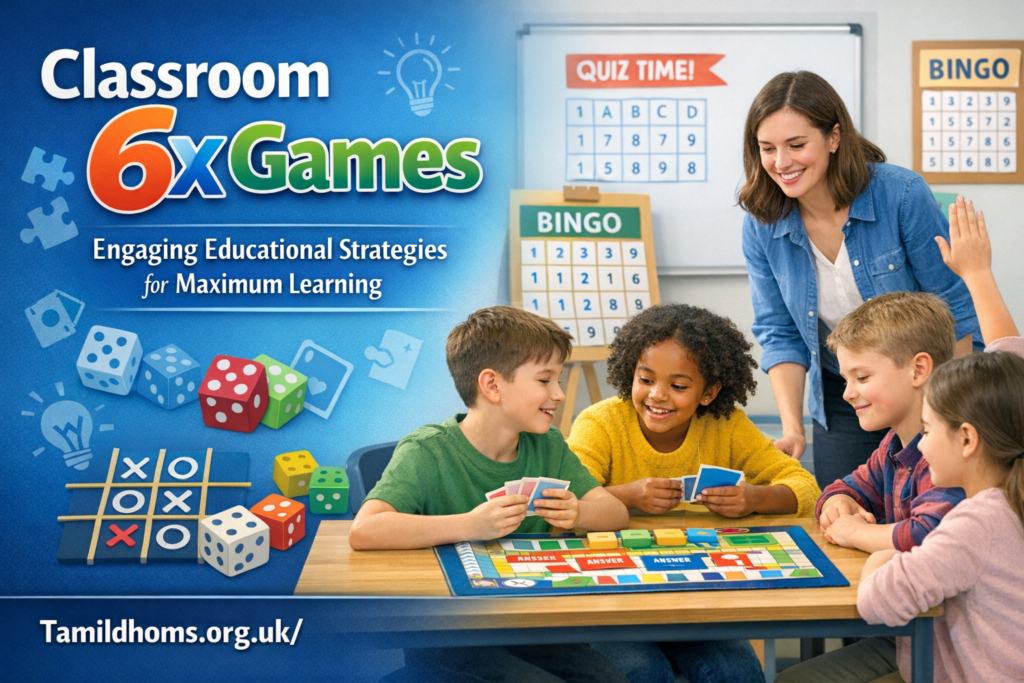
In today’s dynamic educational landscape, keeping students engaged requires more than traditional lectures. Classroom 6x games have emerged as a powerful tool to enhance learning experiences, stimulate creativity, and foster collaboration. These games combine educational content with interactive gameplay, offering a hands-on approach that turns lessons into memorable experiences. By integrating classroom 6x games into curricula, educators can tap into intrinsic motivation, making lessons more enjoyable and effective.
What Are Classroom 6x Games and Why They Matter
Classroom 6x games are interactive educational games specifically designed for use in classrooms, emphasizing repetition and skill reinforcement. The “6x” refers to six core gameplay mechanics that support learning: collaboration, competition, problem-solving, creativity, memory enhancement, and critical thinking. These mechanics ensure that each session engages multiple learning styles, from visual and auditory learners to kinesthetic participants.
Implementing classroom 6x games goes beyond mere entertainment. Research indicates that interactive play enhances knowledge retention by up to 40%, as students actively participate rather than passively consume information. This makes classroom 6x games not only enjoyable but also an essential strategy for educators aiming to maximize learning outcomes and maintain high engagement levels.
Benefits of Classroom 6x Games for Students
One of the most significant advantages of classroom 6x games is the promotion of active learning. Students develop cognitive skills by participating in structured gameplay that reinforces subject knowledge. For example, math-focused 6x games challenge learners to solve problems under time constraints, boosting both speed and accuracy while fostering healthy competition.
Beyond cognitive growth, classroom 6x games improve social and emotional learning. Students learn to collaborate, negotiate, and resolve conflicts during gameplay. These interactions build empathy, communication skills, and teamwork—competencies critical for real-world success. As noted by educational psychologist Dr. Susan Brookhart, “Learning through play engages the whole student, connecting knowledge with motivation, curiosity, and persistence.”
Types of Classroom 6x Games
Classroom 6x games span a wide range of formats tailored to different subjects and learning objectives. Board-based 6x games often focus on strategy and problem-solving, encouraging students to plan and predict outcomes. Digital 6x games leverage technology to create immersive learning environments, integrating multimedia, adaptive challenges, and instant feedback.
Other types include role-playing and simulation-based 6x games, which allow students to step into real-world scenarios. For instance, history classes might use simulation games to recreate historical events, helping students understand context, cause-and-effect relationships, and the nuances of decision-making. These varied formats ensure that classroom 6x games can be adapted to virtually any educational setting.
How Classroom 6x Games Boost Engagement
Engagement is the cornerstone of effective learning, and classroom 6x games excel in this area. By blending learning objectives with interactive play, students remain focused and motivated throughout the lesson. Game mechanics such as point systems, leaderboards, and timed challenges create a sense of achievement that drives continuous participation.
Moreover, classroom 6x games foster intrinsic motivation by making learning enjoyable. Students are more likely to invest effort when they perceive activities as meaningful and fun. This increased engagement correlates with higher knowledge retention, improved critical thinking skills, and a more positive classroom atmosphere, which benefits both students and educators.
Designing Effective Classroom 6x Games
Creating a successful classroom 6x game requires careful alignment with learning objectives. The best games clearly define educational goals, integrate relevant content, and balance challenge with accessibility. Overly complex games can frustrate students, while overly simple games fail to stimulate learning.
Another key design principle is adaptability. Classroom 6x games should accommodate diverse learning styles and allow for scalable difficulty. Teachers can implement adjustable rules, adaptive scoring, or differentiated tasks to ensure every student remains engaged. A well-designed classroom 6x game transforms lessons into dynamic, inclusive experiences.
Comparison of Classroom 6x Game Formats
| Game Format | Key Benefits | Ideal Subjects | Engagement Level |
| Board-Based Games | Encourage strategy, critical thinking | Math, History | High |
| Digital Games | Multimedia integration, instant feedback | Science, Language Arts | Very High |
| Simulation & Role-Play | Real-world scenarios, empathy building | Social Studies, Business | High |
| Quiz & Trivia Games | Memory reinforcement, competition | General Knowledge | Medium-High |
| Cooperative Puzzle Games | Teamwork, problem-solving | STEM, Arts | High |
This table illustrates how different classroom 6x game formats provide unique benefits across subjects, allowing educators to select the most effective method for their learning goals.
Integrating Classroom 6x Games Into Lesson Plans
Integrating classroom 6x games into lesson plans requires strategic planning. Start by identifying learning objectives and mapping gameplay elements to key concepts. For example, a vocabulary lesson might use a word-matching 6x game to reinforce spelling, definitions, and context simultaneously.
Timing is also critical. Short, focused sessions maximize attention, while longer games can serve as capstone activities. Educators should also incorporate reflective discussions after gameplay to reinforce learning. These debrief sessions help students internalize lessons and connect game experiences with broader academic goals.
Technology and Classroom 6x Games
Digital technology has expanded the possibilities for classroom 6x games. Learning management systems (LMS) and interactive platforms allow teachers to track progress, personalize challenges, and provide instant feedback. Gamified apps can adapt difficulty levels in real-time, keeping students in their optimal learning zone.
Augmented reality (AR) and virtual reality (VR) applications further enhance engagement by immersing students in interactive scenarios. These tools are particularly effective for complex subjects like science or geography, where visualizing abstract concepts or remote locations makes learning more concrete and memorable.
Measuring the Effectiveness of Classroom 6x Games
Evaluating the impact of classroom 6x games ensures that educators can refine their strategies. Assessment metrics include engagement levels, knowledge retention, skill development, and student feedback. Pre- and post-game quizzes provide measurable insights into learning outcomes.
Additionally, qualitative feedback reveals how students perceive the learning experience. Observations on collaboration, problem-solving, and motivation help teachers fine-tune gameplay and lesson integration. Consistent evaluation ensures that classroom 6x games remain both enjoyable and educationally effective.
Overcoming Challenges in Classroom 6x Games
Implementing classroom 6x games can present challenges. Resource limitations, varying student abilities, and resistance to new teaching methods may impede adoption. However, these challenges can be mitigated through flexible game design, clear guidelines, and professional development for teachers.
Another common concern is balancing fun with educational value. Teachers must ensure that games reinforce learning objectives rather than becoming distractions. Thoughtful planning, alignment with curricula, and structured reflection sessions help maintain a productive learning environment while preserving the excitement of gameplay.
Future Trends in Classroom 6x Games
The evolution of classroom 6x games is closely tied to educational technology advancements. AI-driven adaptive learning systems can create personalized game experiences, while gamified microlearning modules make knowledge retention more efficient.
Collaborative platforms are also growing, enabling cross-classroom or global competitions. These trends suggest that classroom 6x games will increasingly bridge physical and digital learning, transforming traditional education into an interactive, immersive, and student-centered experience.
Expert Tips for Maximizing Classroom 6x Games
To get the most from classroom 6x games, educators should prioritize variety, inclusivity, and reflection. Rotating game types keeps students engaged, while inclusive design ensures all learners can participate meaningfully.
Additionally, educators should integrate short reflection periods after each game. These discussions encourage critical thinking, consolidate knowledge, and foster self-assessment. As educator Jane McGonigal emphasizes, “Games are not just for fun—they are tools to create meaningful learning experiences that connect players to purpose and curiosity.”
Conclusion
Classroom 6x games are redefining the boundaries of modern education. By combining interactivity, cognitive challenge, and collaboration, they enhance learning outcomes while keeping students engaged and motivated. From board-based puzzles to digital simulations, the flexibility and adaptability of classroom 6x games make them an indispensable part of contemporary teaching strategies. Educators who embrace these tools are not only teaching content—they are cultivating curiosity, critical thinking, and lifelong learning skills.
FAQ About Classroom 6x Games
What are classroom 6x games?
Classroom 6x games are interactive educational games designed to reinforce learning through six key mechanics, including collaboration, problem-solving, and creativity.
How do classroom 6x games improve learning?
They improve learning by engaging multiple senses, promoting active participation, and strengthening memory retention while fostering social skills.
Which subjects benefit most from classroom 6x games?
Math, science, language arts, and social studies all benefit significantly, as games can adapt to diverse topics and learning objectives.
Can classroom 6x games be used online?
Yes, digital classroom 6x games integrate multimedia, adaptive challenges, and interactive features, making them ideal for online learning environments.
How do teachers measure success with classroom 6x games?
Success is measured through engagement, skill development, assessment results, and qualitative feedback from students and teachers.