
The modern university experience in 2026 exists in a strange, often uncomfortable paradox. On one hand, students are more “connected” than any generation in human history, with high-speed campus Wi-Fi, instant messaging groups for every module, and virtual learning environments that never sleep. On the other hand, a profound sense of digital isolation is sweeping through lecture halls from London to New York. Gen Z is currently navigating a world where the convenience of the screen has often replaced the chemistry of the classroom, and the results are hitting a breaking point. After years of hybrid learning and social distancing, the pendulum is swinging back with a vengeance. Students are no longer just asking for better tech; they are craving the messy, unscripted, and tangible reality of in-person connection.
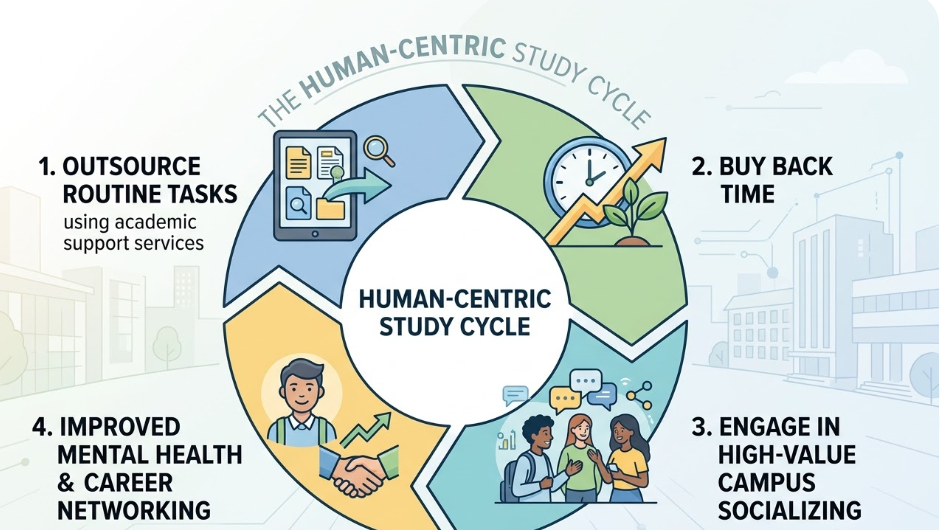
This hunger for physical presence isn’t just a social preference; it’s a survival mechanism against the rising tide of digital burnout. When students are stuck behind a monitor for twelve hours a day, the line between their personal life and their academic obligations begins to blur, leading to a unique kind of exhaustion. To manage this heavy load without losing their sanity, many are turning to strategic support systems. Utilizing professional assignment help from a reliable platform like myassignmenthelp allows students to clear their schedules of repetitive drafting and focus on what truly matters—building real-world relationships and attending networking events that can’t be replicated on a Zoom call. By outsourcing the more mechanical aspects of their coursework, they buy back the time needed to step out of their dorm rooms and back into the vibrant life of the campus. This isn’t about avoiding work; it’s about prioritizing the high-value human interactions that actually lead to job offers and lifelong friendships.
The Myth of Digital Satisfaction: Why Screens Aren’t Enough
For a long time, the prevailing narrative was that Gen Z preferred the digital world because they were the first true “digital natives.” We assumed that because a student can navigate a complex interface with their eyes closed, they would find total fulfillment in online communities and Discord servers. However, 2026 has proven this theory wrong. Search data and campus surveys show a massive spike in terms like “digital fatigue” and “zoom gloom.”
Biologically, the human brain is wired for “co-presence.” When we speak to someone in person, our brains process thousands of micro-expressions, shifts in tone, and even shared environmental factors like the smell of coffee or the hum of a library. Digital communication strips these away, forcing the brain to work twice as hard to fill in the gaps. This leads to “Cognitive Load Overload,” where a student feels exhausted after a two-hour webinar but energized after a two-hour coffee shop study session.
| Feature | Digital Connection | In-Person Connection |
| Energy Drain | High (due to lack of non-verbal cues) | Low (natural social flow) |
| Spontaneity | Low (requires a link/invite) | High (chance encounters) |
| Trust Building | Slower (limited by screen) | Faster (physical presence/rapport) |
| Retention | Passive (easy to distract) | Active (collaborative energy) |
The “Third Space” Crisis and the Need for Social Hubs
One of the biggest drivers of the desperation for connection is the disappearance of “third spaces”—those vital areas that are neither the home (first space) nor the classroom (second space). On many campuses, libraries have become silent digital bunkers where everyone is wearing noise-canceling headphones, and student unions have moved their services to automated portals. Gen Z is now actively campaigning for the return of physical hubs where they can collaborate without a pre-scheduled calendar invite.
These spaces are where the most “Information Gain” happens—where a casual conversation about a lecture leads to a breakthrough in understanding a complex theory. However, the pressure to maintain a perfect GPA often keeps students chained to their desks. When the workload becomes too technical, data-heavy, or mathematically complex to handle in these social settings, students often look for Statistics Assignment Help to ensure their grades stay high while they prioritize these essential human interactions. By securing their academic standing through expert guidance, they can afford to spend their Wednesday afternoons at a student society meeting rather than crying over a spreadsheet alone in the dark.
The “Collaborative Friction” Factor in Modern Learning
There is a growing realization that while AI and search engines can provide answers, they cannot provide perspective. A group of students sitting around a table debating a political theory, a biological process, or a marketing strategy creates a “cognitive friction” that sparks deep learning. You can ask a chatbot for a summary of a book, but you can’t argue with it over a slice of pizza.
This shared intellectual struggle is the glue that binds a cohort together. It builds a sense of belonging that is the strongest hedge against the student loneliness epidemic. When students feel like they are part of a team, their motivation sky-rockets, and the risk of dropping out plummets. Collaborative learning isn’t just about sharing notes; it’s about the shared emotional experience of tackling a difficult degree.
Reclaiming Campus Rituals: Beyond the Diploma
The desperation for connection is also a desire to reclaim the rituals that define the transition into adulthood. The university experience was never just about the degree; it was about the process.
- The Pre-Exam Huddle: The collective nervous energy in the hallway before the doors open.
- The Post-Presentation High: The immediate feedback and celebration with peers.
- The Midnight Library Run: The camaraderie of a group trying to beat a deadline together.
Digital success feels hollow when there is no one there to witness it. This is why we are seeing a massive resurgence in niche campus clubs—everything from analogue photography and vinyl record swaps to community gardening and local activism. These activities offer a “digital detox” and a chance to build a “portfolio of experiences” that a LinkedIn profile could never fully capture.
Why “Human-Like” Content is the New Gold Standard
In an era where the internet is being flooded with AI-generated filler, Gen Z is developing a “BS detector” for anything that lacks a human soul. This applies to the content they consume and the work they produce. Employers in 2026 are looking for original thought, unique voice, and “lived experience.”
This is why academic support has shifted. It is no longer about just “getting it done”; it’s about “making it yours.” High-quality services now focus on providing the research foundations so that the student has the mental space to add their own unique perspective. This balance of professional support and personal voice is the only way to rank in the modern world—both in the Google search results and in the competitive job market.
Conclusion: Designing the 2026 Campus
The “University of the Future” won’t be a virtual reality simulation where we all wear headsets in our bedrooms. Instead, it will be a place that uses technology to facilitate—not replace—the human touch. We are moving toward a “High-Tech, High-Touch” model.
For the student of 2026, the greatest luxury isn’t a faster laptop or a more powerful AI; it’s a meaningful, face-to-face conversation with a peer in a sunlit quad. By recognizing the financial and emotional value of these connections, and by using every tool at their disposal—from academic support services to time-management apps—students can finally bridge the gap between digital efficiency and human fulfillment.
Frequently Asked Questions
Why is in-person interaction more restorative than digital chatting?
Physical presence allows the brain to process non-verbal cues like body language and tone of voice effortlessly. Digital communication lacks these sensory inputs, leading to “cognitive load,” where the brain overworks to interpret a stripped-down version of human connection.
What is a “third space” on a university campus?
A third space is a communal area that is neither a private dorm room nor a formal lecture hall. These are neutral grounds—like cafes, student hubs, or open quads—where spontaneous social “collisions” and collaborative learning naturally occur.
How does social isolation impact academic performance?
When students feel disconnected, their motivation and sense of accountability often drop. Peer-to-peer engagement creates a support network that fosters critical thinking and provides the emotional resilience needed to tackle complex coursework.
Can hybrid learning models satisfy the need for connection?
While hybrid models offer flexibility, they often struggle to replicate the “spontaneous information gain” found in physical settings. To be successful, these models must intentionally design in-person touchpoints to prevent students from feeling like isolated users of a platform.
About The Author
Thomas Taylor is a dedicated education consultant and researcher specializing in the evolving landscape of higher education. With a focus on academic integrity and student success strategies, Thomas contributes to myassignmenthelp by bridging the gap between complex curricula and accessible learning. Known for an authoritative yet empathetic writing style, Thomas’s work helps students navigate the modern challenges of university life with clarity and confidence.